
Table of Contents
- Ideas for 3×3 shell scheme booths
- 1. Print the back wall as one image, not three panels
- 2. Light the graphics, not the floor
- 3. Lose the table
- 4. Put one product at eye height, not six on a shelf
- 5. Build a storeroom out of the corner
- 6. Use the fascia for one word, not your full company name
- 7. Add height with a hanging element if the venue allows it
- Ideas for inline stands, 3×6 and larger
- Island and peninsula stand ideas
- Interactive stand ideas
- Outdoor and open-air stand ideas
- Ideas that work for conference and seminar stands
- How to choose between these
- Frequently asked questions
- Working through the options
Most exhibition stand ideas you will find online were photographed at shows with 9-metre build heights and budgets to match. They are not much help if you have a 3×3 metre shell scheme booth at Dubai World Trade Centre and four weeks to build.
So this list is organised by what you actually have: your stand size and your setting. Each idea notes what it costs you in floor space, build time or budget, because every one of them takes something.
Ideas for 3×3 shell scheme booths
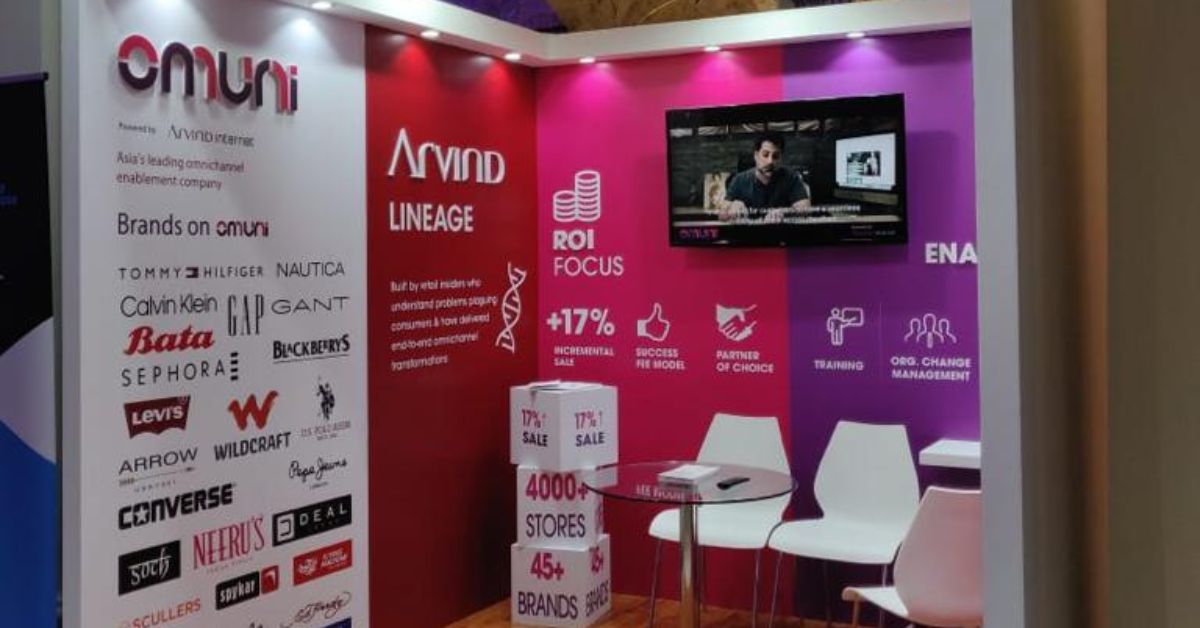
Nine square metres, three walls, and a fascia. The constraint is real, and it is also why a well-executed small booth regularly outperforms a badly executed large one.
1. Print the back wall as one image, not three panels
A shell scheme back wall is usually three separate panels. Treating them as one continuous 3-metre canvas rather than three posters is the single biggest visual upgrade available at this size. Costs nothing extra in print.
2. Light the graphics, not the floor
The standard shell scheme lighting allocation points down at the carpet. Angling fittings onto the back wall instead makes the graphics readable from across the aisle. Costs a five-minute conversation with your contractor.
3. Lose the table
A table placed across the front of a 3×3 booth turns it into a service counter people talk across rather than a space they walk into. Move it to one side and you have doubled your usable floor area.
4. Put one product at eye height, not six on a shelf
Nine square metres cannot carry a full range. One product, lit, at standing eye level, does more than six products competing at waist height.
5. Build a storeroom out of the corner
Boxes, coats and packaging visible on the stand undo everything else. A half-metre lockable corner cupboard costs floor space and buys back the entire look of the booth.
6. Use the fascia for one word, not your full company name
Fascia character limits are tight and the text is read at distance and at speed. What you do is often more useful there than who you are.
7. Add height with a hanging element if the venue allows it
Some halls permit lightweight suspended signage above shell scheme; some do not. Worth asking, because it is the only way to be visible beyond your immediate aisle from a small booth.
More on working within a standard booth: seven shell scheme booth design mistakes to avoid and how to customise an Octanorm shell scheme booth.
Ideas for inline stands, 3×6 and larger
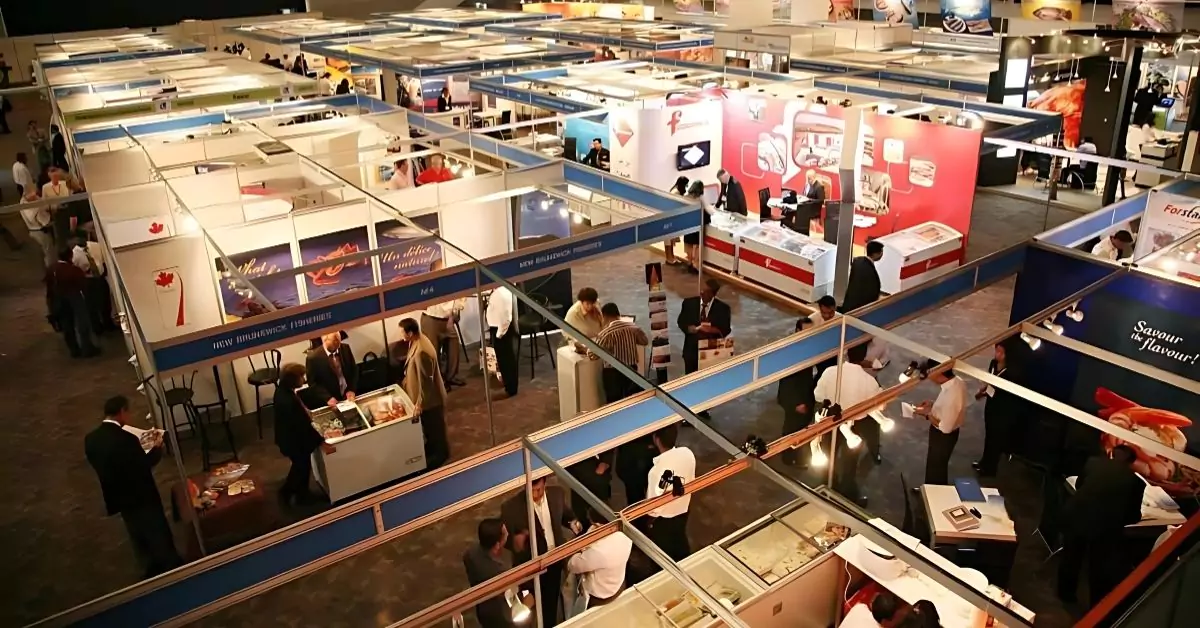
One open side, more width. The challenge shifts from making space to giving people a reason to stop walking.
8. Split the width into two zones
A long single-purpose wall reads as one message people take in while walking past. Two zones with different purposes — demonstration and conversation, say — gives them two reasons to stop.
9. Set the meeting area back, not at the aisle
Meetings held at the front block the entrance. Held at the back, they draw people in past everything else.
10. Make the floor part of the design
Raised flooring, a colour change or a routed path reads from the aisle and defines your space without walls. Costs build time and a small step height.
11. Use a curved wall
Straight walls make a rectangle read as a rectangle. A single curve softens the whole footprint and pulls sightlines inward. Costs more in fabrication than a flat wall.
12. Run one continuous light line
A single LED line following the stand’s edge or ceiling does more for coherence than a dozen spotlights. It also photographs well, which matters for your own post-show content.
Island and peninsula stand ideas
Open on three or four sides. No back wall to hide behind, and every angle is a front.
13. Design a centre, not a perimeter
The common mistake on island stands is pushing everything to the edges, leaving a hollow middle. A central structure — a bar, a tower, a demonstration pod — gives the stand a reason to be walked around.
14. Build a tower
Vertical branding above head height is the only signage visible from the far end of a hall. Subject to the venue’s height limit and usually to organiser approval.
15. Go double-decker if meeting time is the bottleneck
A second storey converts floor space into private meeting space without increasing your footprint. It needs structural drawings, organiser approval and a larger budget. See what a double-decker exhibition stand involves.
16. Leave one side genuinely open
Four sides of structure makes an island feel like a fortress. One deliberately unobstructed approach raises footfall more than any graphic.
Interactive stand ideas
Interactive means giving visitors something to do that is worth their time. Most fail because the activity has nothing to do with what the company sells.
17. Demonstrate the product rather than screening a video
A live demonstration on a timed loop draws a crowd, and a crowd draws a crowd. A looping video does not.
18. Make one touchscreen do one job
A screen running your entire website will be ignored. A screen doing one thing — configure a product, book a callback, check a spec — gets used.
19. Show the process, not just the output
If something is fabricated, assembled or tested, showing that happening is more compelling than displaying the finished item. Works particularly well at industrial shows like ADIPEC and The Big 5.
20. Give people a reason to stay seated
Seating, charging points and a drink extend a thirty-second conversation into a five-minute one. At a show like GITEX Global, where visitors walk for hours, this works harder than any interactive gadget.
21. Capture data at the point of interest
Badge scanning or a QR code placed where someone has just shown interest collects better leads than a form at the exit.
Outdoor and open-air stand ideas
Outdoor space at UAE venues brings sun, wind and heat into the design brief. Anything that works indoors needs rethinking.
22. Design for shade first
Shade is the feature, not an accessory. A structure people can stand under is what converts an outdoor plot into a stand, and it determines the whole design.
23. Assume wind loading
Freestanding panels, banners and roofs need ballast and engineering outdoors. This affects structural approval and is not something to discover during build-up.
24. Choose materials for heat and glare
Gloss finishes that look sharp indoors become unreadable in direct sun. Matte surfaces, deeper colours and backlit rather than front-lit signage hold up better.
Ideas that work for conference and seminar stands
Keep sightlines to the stage clear
At conference venues a stand that blocks the view of the session is actively resented. Low-profile builds with vertical branding work better than tall walls.
Design for the break, not the session
Nobody visits your stand while the keynote is running. Everything happens in three fifteen-minute windows, so the layout needs to handle a rush and then nothing.
How to choose between these
The practical filter is not which idea looks best. It is which ones your stand type can carry.
- One show, small space — ideas 1 to 7. A shell scheme booth executed well beats an ambitious build executed badly.
- Several shows a year — ideas 8 to 12 built on a reusable system. Modular exhibition stands let you reconfigure the same structure per show.
- Large or unusual footprint — ideas 13 to 16 need custom built exhibition stands.
- High-end finish, still reusable — Maxima stand design sits between modular and custom.
Several of these ideas need organiser approval before build-up, particularly towers, raised floors, hanging elements and anything double-decker. Factor that into the timeline: see the exhibition booth setup timeline.
Frequently asked questions
What makes an exhibition stand stand out?
Usually one clear idea executed properly rather than several competing ones. Legible branding from the aisle, a defined reason to step in, and lighting that points at the graphics do more than novelty.
How can I make a small exhibition stand look bigger?
Keep the front open, move furniture to the sides, use one continuous graphic instead of separate panels, and build height where the venue allows it.
What are good interactive exhibition stand ideas?
Live product demonstrations, a single-purpose touchscreen, showing a process rather than a finished item, and comfortable seating. Interactivity works when it relates to what you sell.
What should an outdoor exhibition stand include?
Shade as the primary structure, ballast and wind engineering, and matte materials that stay readable in direct sun.
Which ideas need organiser approval?
Anything above standard height, hanging or rigged elements, raised platforms and double-decker structures. Your contractor should submit structural drawings and a method statement.
Working through the options
Orange Fairs has designed and built exhibition stands since 2005, with our own workshop in Dubai and regular builds at Dubai World Trade Centre, ADNEC, Expo City Dubai and Expo Centre Sharjah.
Send us your show, stand size and which sides are open, and we will come back with a 3D concept applying whichever of these ideas actually fits your space. The design costs nothing.
Browse the stand portfolio or see how the design and build process works.